· Rehman Ahmad · 6 min read
The Rs 20 Pencil Bank: How My Class 2 Stopped Losing Pencils Every Day
My Class 2 students lost pencils, erasers and sharpeners every single day, and their parents were too poor to keep replacing them. So I built a Rs 20 class pencil bank instead: community supplies, one bin, and two students on duty.
The Rs 20 Pencil Bank: How My Class 2 Stopped Losing Pencils Every Day
From The Head Teacher’s Diary — real stories from a primary-school classroom in Yazman, Pakistan. Entry No. 1.
Every morning, the same complaints waited for me at the classroom door.
A pencil was lost. An eraser had disappeared. A sharpener was nowhere to be found. And behind those small complaints stood a bigger problem: the parents of my students are poor. A pencil costs little, but when a child loses stationery almost every day, “little” stops being little. Children were taking money from home daily for replacements — and at home, that money came out of an already tight budget.
I am the head teacher of my primary school, and also the in-charge of Class 2. So this was my problem to solve, twice over.
The Problem Was Not the Children
The easy response is to scold. “You are careless. Look after your things.” Every teacher has said it; I have said it myself.
But watch the situation honestly: a six or seven year old, a full day of lessons, playtime, bags being opened and closed a dozen times — and no place, no system, no routine for keeping three small items safe. We were expecting small children to protect stationery with nothing but memory and fear of scolding.
Teachers everywhere know this as the problem of disappearing pencils — and it is rarely solved by buying more pencils.
The children were not the problem. The absence of a system was.
So instead of another lecture, I built a system.
Every Child Gives Rs 20 — Once
I told the class: every child will bring Rs 20. Not every day. Just once, into one shared collection.
From that collection, we bought pencils, erasers and sharpeners for the whole class — together with a small bin to keep them in. From that day, the stationery stopped belonging to individual children. It belonged to the class — community supplies, owned by everyone and cared for by everyone.
Then came the part that made it work: two students are on duty every day.
- In the morning, the duty students hand out a pencil, an eraser and a sharpener to every child.
- At closing time, they collect everything back from everyone and place it in the bin.
- The next morning, the same routine begins again.
That is the whole system. No register, no software, no expense beyond the first collection.
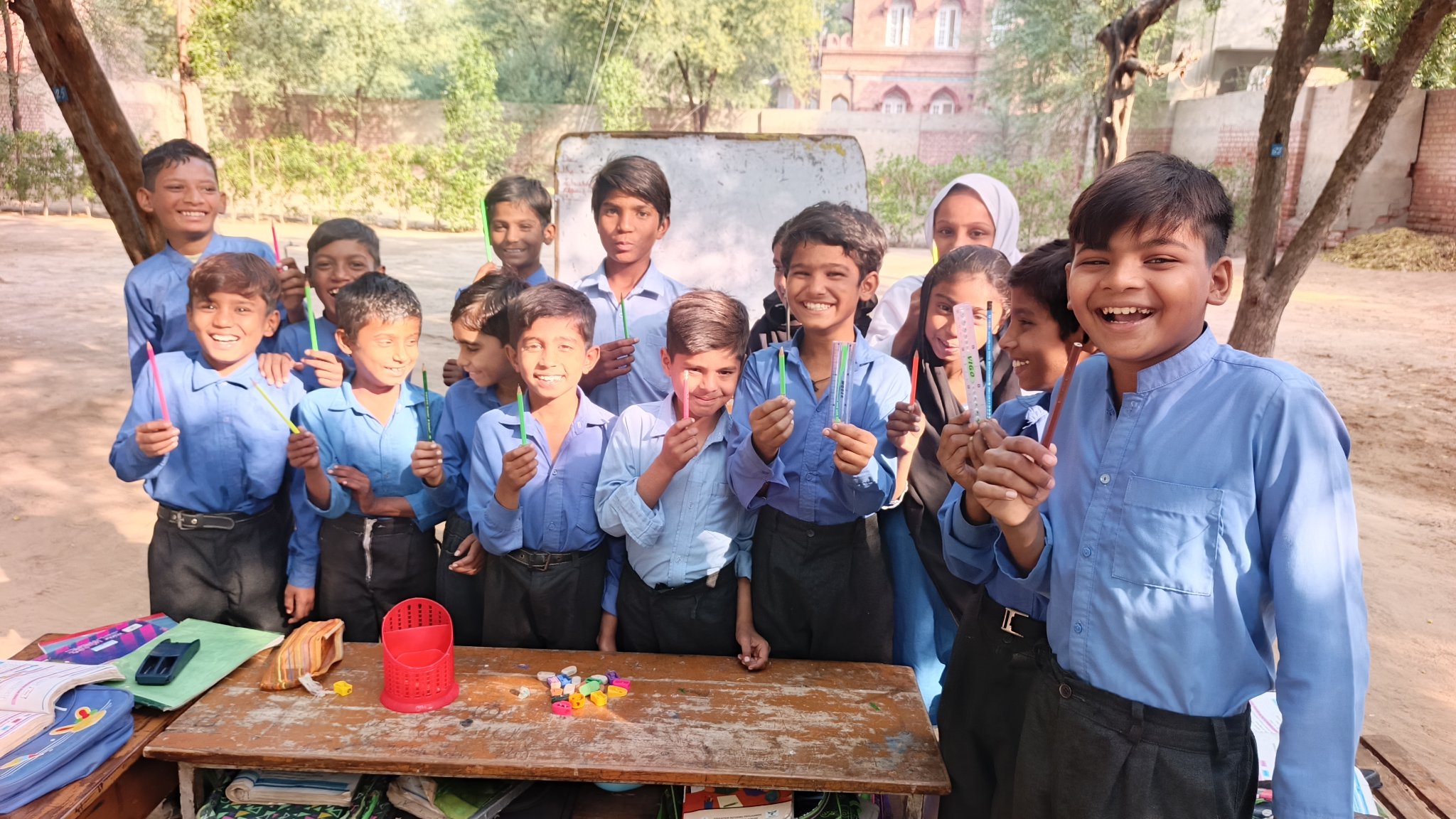
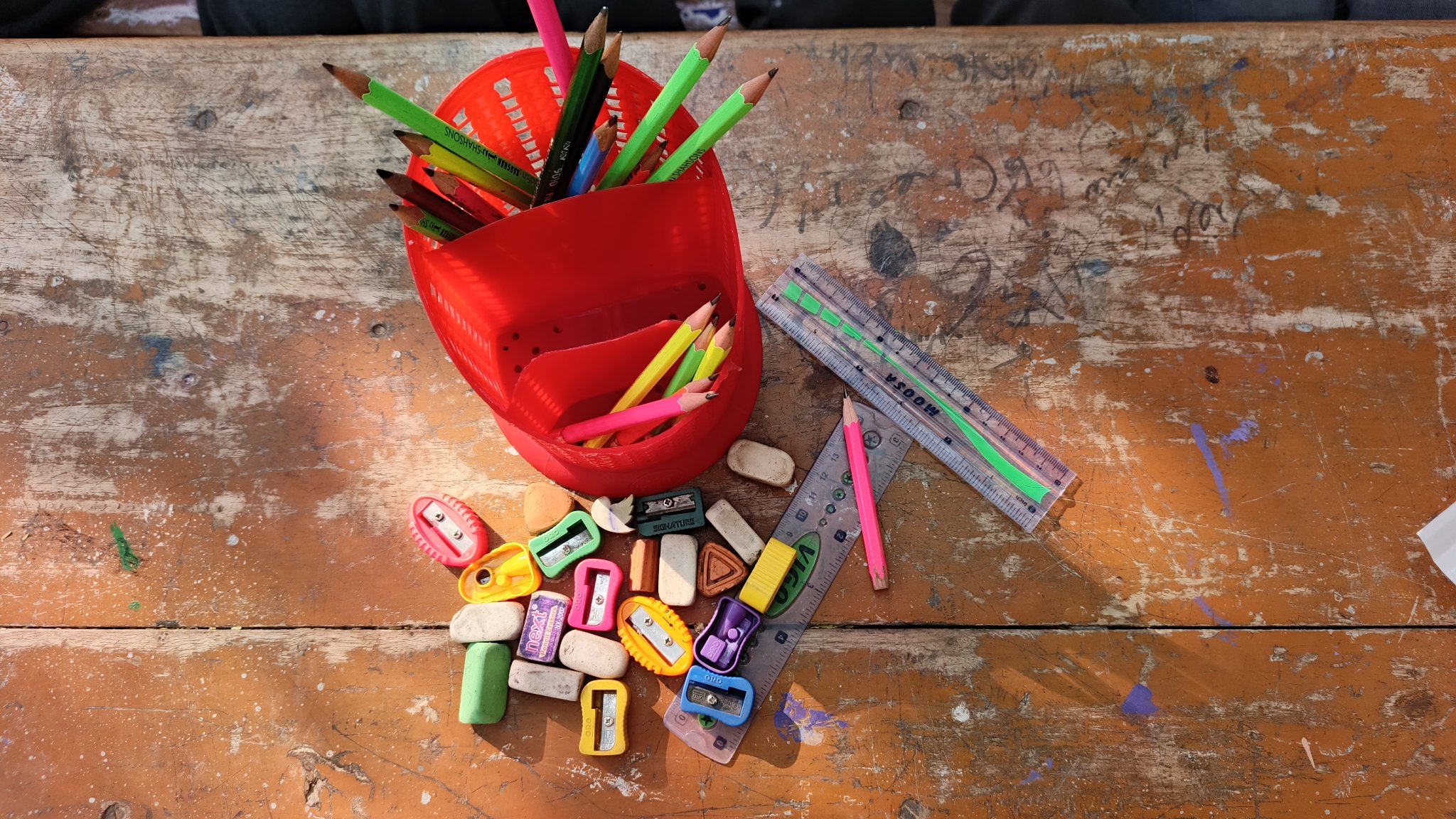 The whole system in one picture: one red bin, and every pencil, eraser, sharpener and ruler belongs to the class — not to any one child.
What Changed
The results surprised even me.
A pencil now lasts about two weeks. Before the pencil bank, a pencil could vanish the same day it was bought. Now the same pencil keeps coming back to the bin every evening, so it survives until it is genuinely used up.
The daily money stopped. Earlier, children asked for money at home almost every day for a lost item. Now the collection happens once, and the next one is needed only after roughly two weeks. For a poor household, removing a daily small expense is not a small thing.
The complaints ended. The morning queue of lost-pencils simply disappeared, because there is nothing left to lose — everything returns to the bin.
And something less visible grew: responsibility. The duty students take their job seriously. Collecting from everyone, missing no one, keeping the bin in order — that is trust, and children rise to meet trust. The whole class cares for the stationery now, because it is ours. A personal pencil got lost. The class pencil gets protected.
Why It Works
Looking back, three things made the difference:
- Ownership changed. What belongs to everyone is watched by everyone.
- The routine is daily and visible. Out in the morning, back at closing. Nothing depends on a child’s memory at home.
- The cost is shared and tiny. Rs 20, once in a while, never burdens one family — and no child is singled out, because everyone is an equal shareholder in the bank.
Try It in Your Classroom
If your class has the same morning complaints, the recipe is simple:
- Fix a small, equal contribution every child can afford — for us it was Rs 20.
- Buy the stationery for the whole class from the pooled money, plus one box or bin.
- Put two students on duty daily — hand out in the morning, collect everything at closing.
- Rotate the duty so every child serves.
- Keep the collection and spending open and simple; the class should always know where the money went.
You do not need permission, a budget line, or an NGO. You need Rs 20 per child and the decision to fix the system instead of the child.
The Lesson I Took Home
Teaching is full of problems we blame on children: lost things, forgotten things, unfinished things. This small experiment taught me to ask a different question first — is there a system, or am I expecting a seven year old to be one?
A pencil bank will not transform education. But it turned a daily complaint into a daily lesson in sharing, duty and care — and it costs less than the price of the pencils we were losing.
If you try it in your school, I would genuinely like to hear how it went.
— Rahman Ahmad Chaudhary, Head Teacher, GPS 117 DB(BJ), Yazman. More entries from The Head Teacher’s Diary are on the way.
FAQs
How do you solve the problem of disappearing pencils in the classroom? Stop treating each pencil as private property. Pool a tiny equal contribution (we used Rs 20 per child), buy stationery for the whole class, store it in one bin, and have two duty students hand it out every morning and collect it back at closing. When stationery belongs to the class and returns to one place daily, losses almost disappear.
How do you manage classroom stationery when parents cannot afford supplies? Spread the cost thin and share it. Our pencil bank runs on Rs 20 per child, collected roughly once every two weeks — far cheaper for poor families than replacing a lost pencil, eraser or sharpener every other day, and no child is singled out because everyone contributes equally.
What is a class pencil bank? A pencil bank is a simple classroom system: stationery is bought from a small pooled contribution, owned by the class, kept in a shared bin, and distributed and collected daily by students on duty. In my Class 2 it stretched one pencil’s life to about two weeks and ended daily lost-stationery complaints.