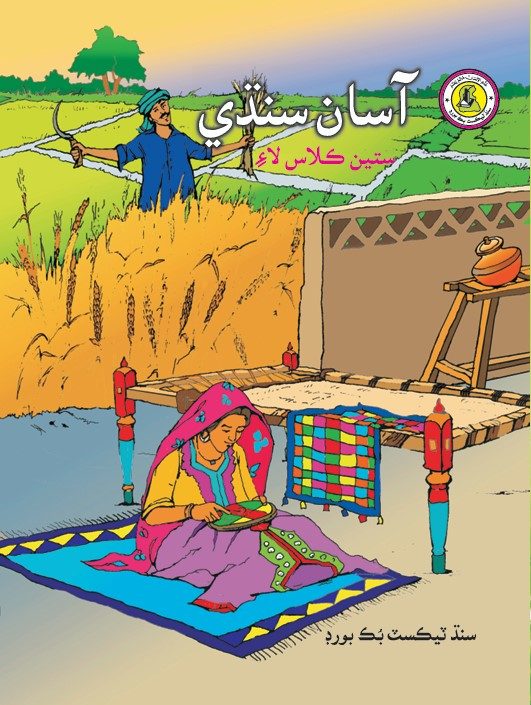
Asan Sindhi VII — Class 7 Sindh Board book
Official Sindh Textbook Board (STBB), Jamshoro Sindhi textbook for Class 7 (Urdu Medium). Neeche poori kitab online parhein ya official PDF download karein — bilkul muft.
Poori kitab yahin parhein
Asan Sindhi VII — Class 7 — neeche scroll karte jayein, aglay safhay khud aa jayein ge. Zoom bhi kar sakte hain.
Internet darkar hai — kitab official STBB file se load hogi
Chapter Quiz
Kitab load hote waqt waqt guzarein — Asan Sindhi VII ke asbaaq par 5 sawal!
📚
Kitne chapter yaad hain aap ko?
1 / 5
🎉
0 / 5 durust!
Is kitab ke baare mein
Asan Sindhi VII is the Sindhi-as-a-language textbook for Class 7 students in Urdu-medium schools, published by the Sindh Textbook Board (STBB). Across 30 ordered lessons it blends poetry and prose: opening pieces like حمد, نعت and حُب الوطني sit beside moral lessons such as اخلاقي قدر and the tale of the ڏاهو هاري (the wise farmer). Every lesson carries its own exercises — سوالن جا جواب, vocabulary practice and writing drills — so students build reading, meaning and sentence work together.
The book is grounded in Sindh's own culture and history: students travel with ابن بطوطه جو سنڌ جو سفر, meet مخدوم نوح and شمس العلماء ڊاڪٽر عمر بن محمد دائودپوٽو, and visit سيوهڻ. But it also speaks to everyday modern life — lessons on ٽيليفون, مليريا, صحت جي سنيال, ٽرئفڪ جا اُصول and اُپت ۽ خرچ make it a reader that teaches language through topics children actually encounter.
Aham mozuaat
حمد ( نظم )
Page 5
پاڻ سڳورن صلَي الله عليِه وعلَي آلِهٖ واصحابِهٖ وسلَم جو پاٽيسرين سان ورتاءُ
Page 6
حضرت علي ڪرم الله وَجهَه جي مهمان نوازي
Page 8
سوات جي ماتري جو سير
Page 11
نعت ( نظم )
Page 14
انصاف
Page 15
ڳوٺاڻي زندگي
Page 17
جنبيءَ جو ڪم
Page 20
اخلاقي قدر ( نظم )
Page 22
ٽيليفون
Page 23
ابن بطوطه جو سنڌ جو سفر ( سفرنامو )
Page 25
سُنو شهري
Page 27
حُب الوطني ( نظم )
Page 29
وڏن جو چيو مڃجي
Page 30
ٽرئفڪ جا اُصول
Page 32
هاري ( نظم )
Page 35
مخدوم نوح ( هاڻ وارو )
Page 37
مليريا
Page 39
ايڪو زنده باد ( نظم )
Page 41
بهادر ماءُ
Page 43
شمس العلماء ڊاڪٽر عمر بن محمد دائودپوٽو
Page 45
فطرت جو اپياس
Page 47
سيوهڻ
Page 49
ٻن ٻلين جي ڳالهه ( نظم )
Page 51
خلق جي خدمت
Page 53
صحت جي سنيال
Page 55
اُپت ۽ خرچ
Page 57
سوپ جي خوشي
Page 60
ڏاهو هاري
Page 62
دُعا ( نظم )
Page 64
Ustad ka mashwara
Sindhi is a second language for most Urdu-medium students, so don't start from lesson 1 like a storybook — open each نظم with reading aloud together (حمد, نعت, هاري) and let students feel the rhythm first; new words stick faster when they hear them sung. Pair the practical lessons (ٽيليفون, ٽرئفڪ جا اُصول, اُپت ۽ خرچ) with classroom role-play — bacho ko ye asbaq jeena chahiye, sirf parhna nahi.
— Rehman Ahmad Chaudhary, Head Teacher, GPS 117 DB(BJ), Yazman
Aksar pooche gaye sawalat
Is Asan Sindhi VII the Sindhi-medium or Urdu-medium version?
This is the STBB (Sindh Textbook Board) Sindhi language reader used in Urdu-medium schools — the book itself is entirely in Sindhi script (عنوان: آسان سنڌي ڪتاب, for Class 7), while the badge 'Urdu' marks it as the edition meant for Urdu-medium learners.
How many lessons does the book have?
30 lessons, numbered سبق 1 to سبق 30, running from حمد on page 5 to دُعا on page 64 — a mix of poems (marked نظم), stories, travel writing and informational essays.
Which poems (نظم) are included?
Seven poems: حمد, نعت, اخلاقي قدر, حُب الوطني, هاري, ايڪو زنده باد, ٻن ٻلين جي ڳالهه, and دُعا — each printed with its own vocabulary and comprehension exercises for recitation practice.
Does the book include Sindh's own history and personalities?
Yes — lessons like ابن بطوطه جو سنڌ جو سفر (a travelogue), مخدوم نوح, سيوهڻ, and the biography of شمس العلماء ڊاڪٽر عمر بن محمد دائودپوٽو root the language in Sindh's culture and scholars, alongside modern topics like the telephone, malaria, and traffic rules.
Class 7 ki mazeed kitabein
Disclaimer
Ye kitab Sindh Textbook Board (STBB), Jamshoro ki official publication hai. Download aur online reading STBB ke official e-books portal (ebooks.stbb.edu.pk) se faraham ki jati hai — sirf talimi maqsad ke liye. Malkiyat STBB ki hai; is site ka koi dawa nahi.