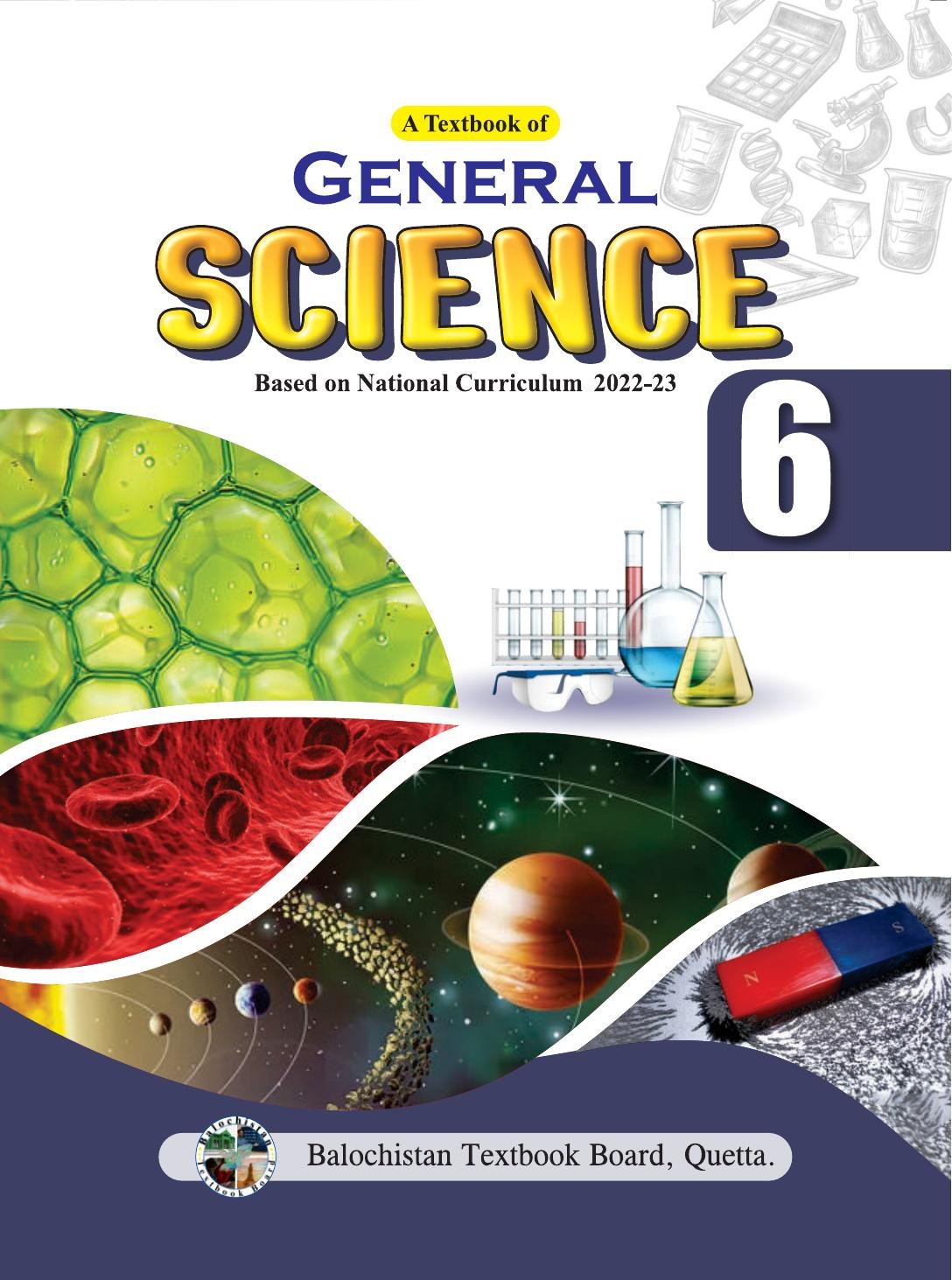
General Science - Grade 6 — Class 6 Balochistan Board book
Official Balochistan Textbook Board (BTBB), Quetta General Science textbook for Class 6 (English Medium). Neeche poori kitab online parhein ya official PDF download karein — bilkul muft.
Poori kitab yahin parhein
General Science - Grade 6 — Class 6 — neeche scroll karte jayein, aglay safhay khud aa jayein ge. Zoom bhi kar sakte hain.
Internet darkar hai — kitab official PECTAA file se load hogi
Chapter Quiz
Kitab load hote waqt waqt guzarein — General Science - Grade 6 ke asbaaq par 5 sawal!
📚
Kitne chapter yaad hain aap ko?
1 / 5
🎉
0 / 5 durust!
Is kitab ke baare mein
The Balochistan Textbook Board's Class 6 General Science (National Curriculum 2022-23) is a twelve-unit tour of how the living and physical world work, written for young scientists who learn by doing. It starts inside the living cell — cell structure, tissues, organs and organ systems — then moves through plant reproduction, balanced diet and the human digestive system, building a complete picture of how life is organized and sustained.
The second half turns to matter and energy: particle theory, elements and compounds, mixtures and how to separate them, the forms of energy, electricity with real circuit work, and magnetism including electromagnets. The book then comes home with 'Technology in Everyday Life' — growing seasonal vegetables, making yogurt and cheese, building a solar oven and wiring an electric bell — before looking up at the Solar System, from asteroids to Halley's comet. Every unit ends with Key Points and an Exercise.
Medium: English Medium.
Aham mozuaat
1. Cellular Organization
Cell — the basic unit of life; structure of plant and animal cells and human body cells; levels of cellular organization; tissues, organs and organ systems in plants and the human body. Page 10
2. Reproduction in Plants
Sexual and asexual reproduction in plants; advantages of artificial propagation. Page 36
3. Balanced Diet
Food groups and sources; carbohydrates, proteins, fats, vitamins and minerals; balanced diet and nutritional deficiency disorders. Page 53
4. Human Digestive System
Digestion, the alimentary canal, role of enzymes in digestion, importance of digestion, and digestive disorders. Page 69
5. Matter as Particles
Particle theory of matter; particle arrangement in different states; evidence for particle theory; diffusion; changes in states of matter and the processes involved. Page 82
6. Elements and Compounds
Atoms and molecules; structure of an atom; symbols of elements, atomic number (Z), mass number (A); physical properties of elements; metals and non-metals; classification of first 10 periodic-table elements; why atoms form molecules; elements vs compounds. Page 100
7. Mixtures
Types of mixtures; elements, compounds and mixtures; air as a mixture; difference between pure substance and mixture; ways of separating mixtures; water — a universal solvent. Page 121
8. Energy
Energy as a physical quantity; potential and kinetic energy and their relationship; law of conservation of energy; energy converters; sources of energy including renewable and non-renewable sources. Page 135
9. Electricity
Static and current electricity; electric circuit and simple electric circuit; circuit components and their symbols; open and closed circuits; types of electric circuits; series and parallel circuits, their uses in daily life; factors affecting bulb brightness and motor speed. Page 156
10. Magnetism
Magnets and their properties; magnetism and magnetic field; polarity of magnets; magnetizing and demagnetizing; types of magnets, temporary and permanent magnets; electromagnets and their applications in daily life; earth's magnetic field. Page 172
11. Technology in Everyday Life
Growing seasonal plants and vegetables; summer and winter plants; preparation of milk products — making yogurt and cheese at home; making a solar oven; assembling an electric bell. Page 188
12. Solar System
Stars and planets; solar system; asteroids, meteorites and comets; satellites; sighting of Halley's comet. Page 201
Ustad ka mashwara
Unit 1 (Cellular Organization) ke liye onion peel slide wala experiment zaroor karwayein — SLOs mein clearly likha hai 'compare an animal cell and plant cell by preparing slides using onion peels and cheek cells'. Bachon ko yeh activity hamesha yaad rehti hai. Electricity (Unit 9) mein bulb ki brightness aur motor ki speed wale factors (9.3.4) practically dikhayein. 'Technology in Everyday Life' (Unit 11) ghar ka homework banayein — solar oven ya electric bell jo bacha khud banaye, use class mein demo ka moqa dein.
— Rehman Ahmad Chaudhary, Head Teacher, GPS 117 DB(BJ), Yazman
Aksar pooche gaye sawalat
Where can I download the official Class 6 General Science book?
From the BTBB read-book page for this book — the download option there pulls the official file from the Board's Google Drive. You can also read it page by page in the Online Parho reader on this site.
How many units are in this book?
Twelve: Cellular Organization, Reproduction in Plants, Balanced Diet, Human Digestive System, Matter as Particles, Elements and Compounds, Mixtures, Energy, Electricity, Magnetism, Technology in Everyday Life, and Solar System — plus a glossary.
Which unit has practical projects?
Unit 11, 'Technology in Everyday Life': growing seasonal plants and vegetables, preparing milk products (yogurt, cheese), making a solar oven, and assembling an electric bell. These are the most hands-on pages in the book.
Is this book on the new national curriculum?
Yes — this book follows the National Curriculum of Pakistan 2022-23, the same framework behind the new Balochistan textbooks series.
Class 6 ki mazeed kitabein
Disclaimer
Ye kitab Balochistan Textbook Board (BTBB), Quetta ki official publication hai. Download aur online reading BTBB ke official e-books portal (btbb.com.pk) se faraham ki jati hai — sirf talimi maqsad ke liye. Malkiyat BTBB ki hai; is site ka koi dawa nahi.